
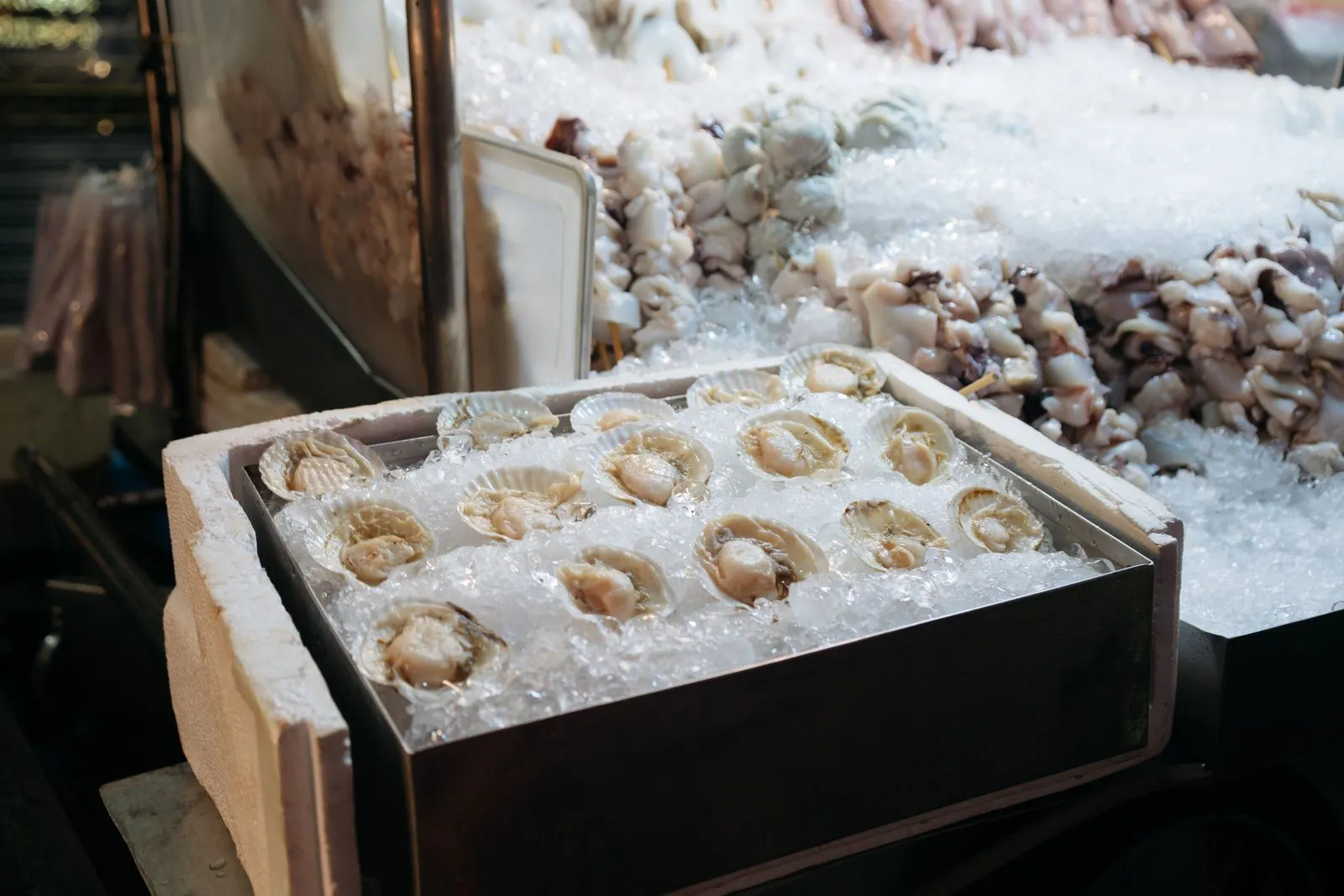
Live shellfish need cold temperatures and airflow to stay in good condition before cooking. Once you get them home, refrigerate them promptly and keep them separate from foods that could be contaminated by drips. Avoid sealing shellfish in an airtight bag or submerging them in fresh water. The right approach varies by type, so follow any storage instructions from your seller, especially for oysters, clams, mussels, and crabs.
Refrigerate Promptly
Take live shellfish home in a cool bag if the journey is long, then place them in the refrigerator as soon as possible. Keep them at 40°F (4°C) or colder, using a refrigerator thermometer if you are unsure of the temperature. Store shellfish on a tray or in a bowl on a low shelf, where liquid cannot drip onto ready-to-eat foods.
Do not leave shellfish at room temperature while you prepare other ingredients. If they arrive warm, damaged, or with an unusual odor, contact the seller for guidance rather than assuming refrigeration will make them safe. Keep raw shellfish away from cooked foods, and wash your hands and any surfaces that touch them.
Allow Airflow
Live shellfish need to breathe. Keep them in a clean container covered loosely with a damp cloth or paper towel, or use the packaging recommended by the seller. Do not tie them in a plastic bag or place them in a sealed container. The covering should help prevent them from drying out without trapping air.
Do not store live shellfish directly on ice or let them sit in melted ice or fresh water. Fresh water can harm many saltwater shellfish, and standing liquid can cause them to deteriorate. If you use a tray to catch drips, empty it as needed while keeping the shellfish cold and ventilated.
Check Before Cooking
Check shellfish before cooking and discard any with cracked or badly damaged shells. For clams and mussels, tap shells that are open; if they do not close, discard them. Follow the seller’s handling instructions for other types, since signs of life differ. Do not taste shellfish to decide whether it is safe.
Cook live shellfish as soon as practical after purchase, ideally the same day. If you cannot cook them that day, ask the seller how long that particular type can be held safely and follow their advice. Do not rely on appearance or smell alone to confirm safety, and discard shellfish that have been kept outside safe refrigeration.
Cook Thoroughly
Use a reliable recipe and cook shellfish thoroughly. During cooking, discard clams and mussels that do not open. This check does not replace good storage or careful handling, so start with shellfish that was kept cold and ventilated. Wash utensils and work surfaces after contact with raw shellfish.
If you have questions about a specific species or how it was packed, ask your fishmonger before leaving the market. Leeds Shellfish Market can provide handling guidance for shellfish purchased there; follow that advice along with local food-safety guidance.
Keep live shellfish cold, loosely covered, and out of standing water, then cook them promptly. When storage time or condition is uncertain, do not take a chance; check with the seller or discard them. Ask your fishmonger for species-specific advice when you buy.